Fiddle Leaf Fig Care Guide: Light, Water and Leaf Drop
Big violin-shaped leaves that love light and hate being moved
Looking for another species? See the plant library for identification and care guides by plant.
The Fiddle Leaf Fig is a fig tree from the lowland rainforests of western and central Africa, named for its large, violin-shaped leaves. Indoors it can grow into a striking tree, but it has strong opinions: it wants a lot of light, steady watering, and to be left in one place.
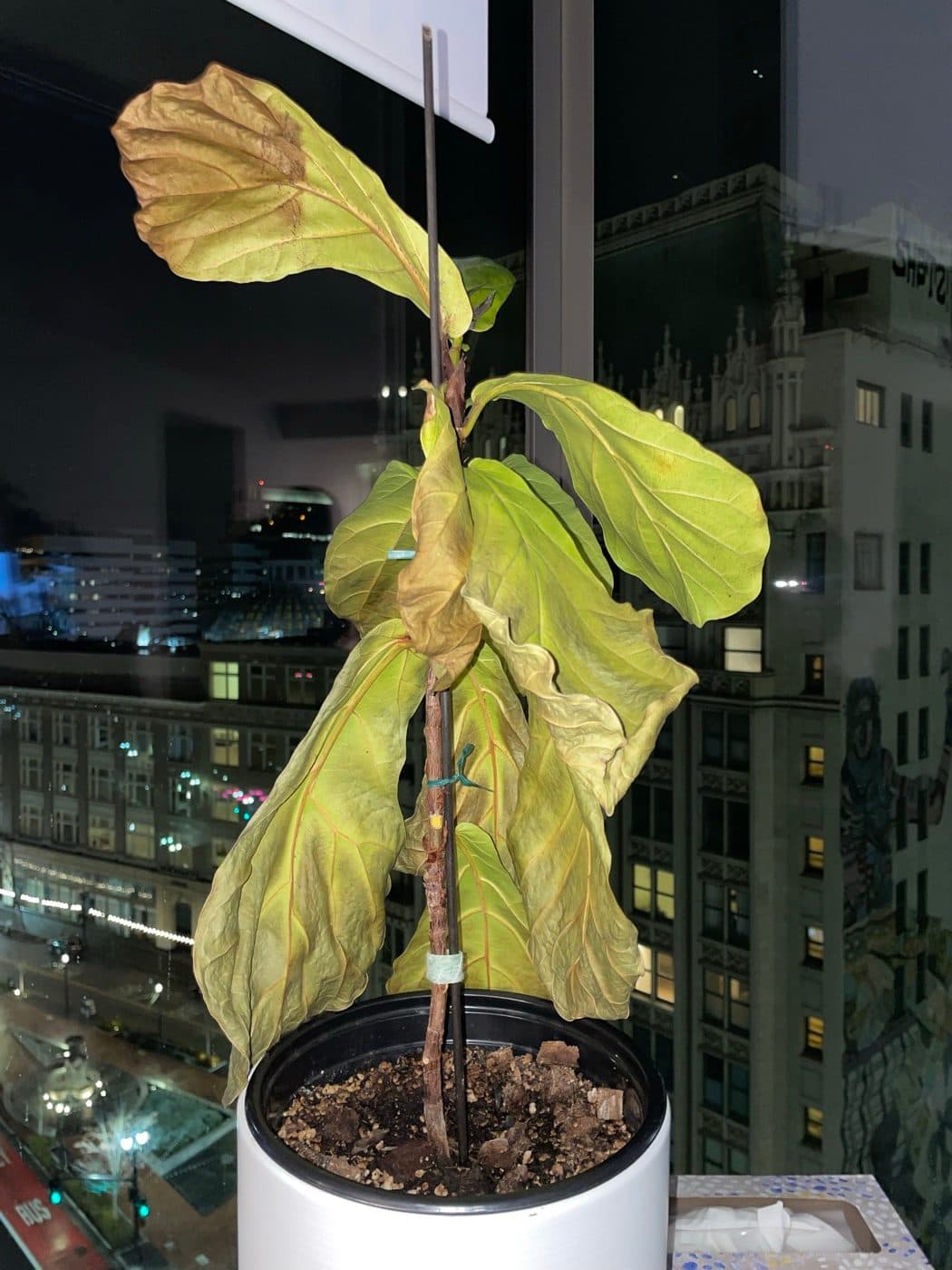
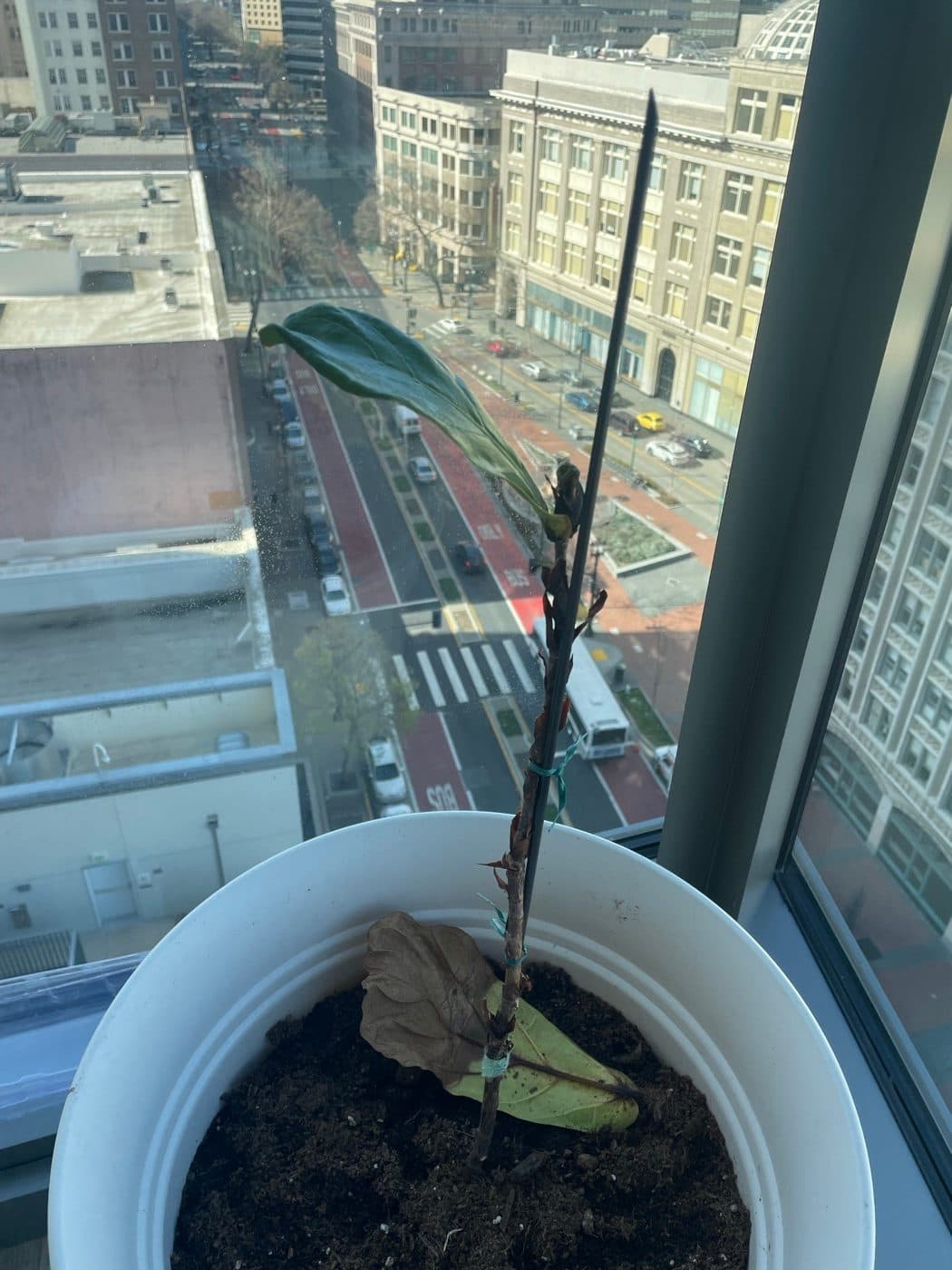
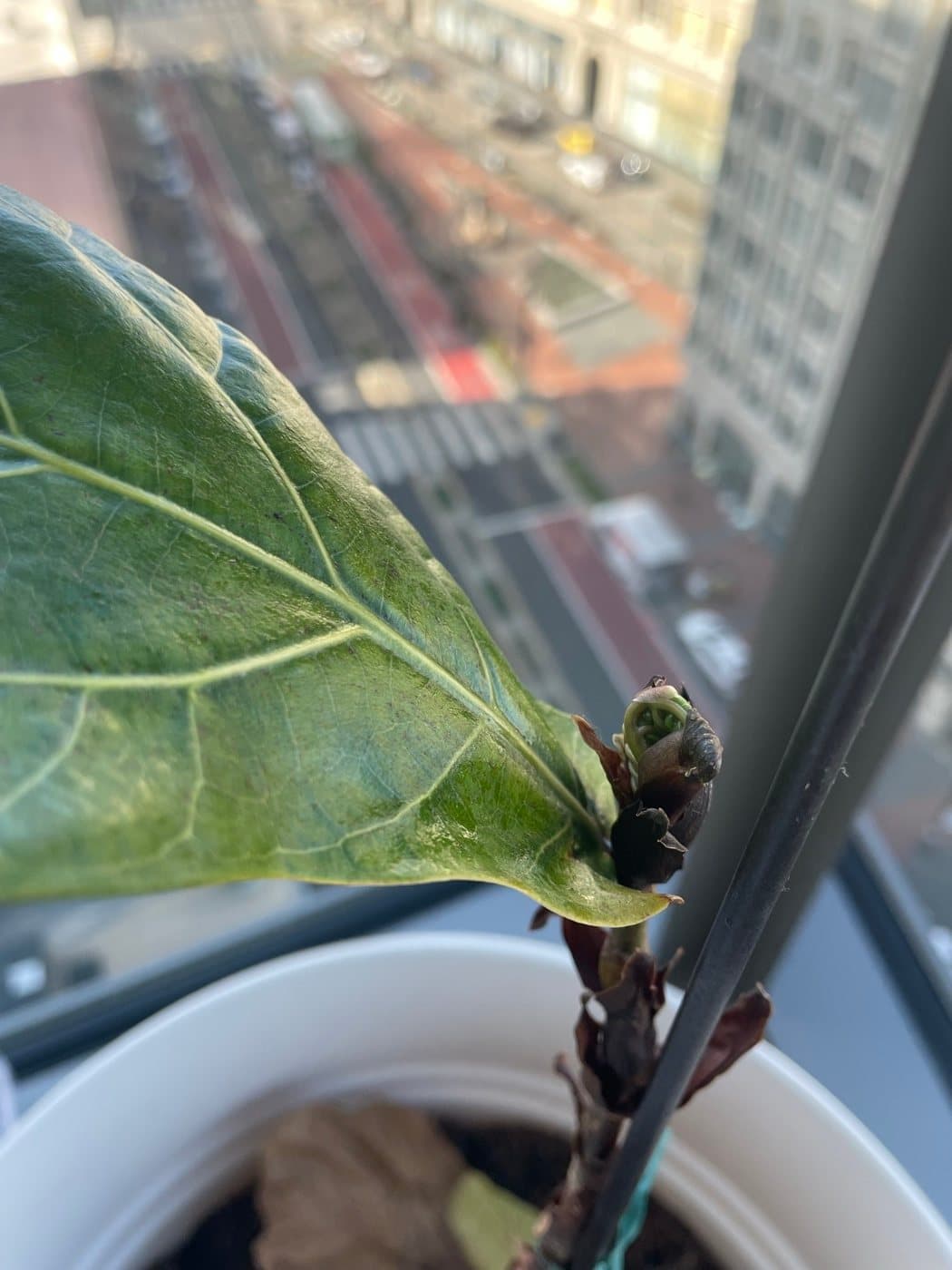
We know this one well. Our own fig, Fiddle Fi Fo Fun, went from glossy to a single leaf because we watered on a schedule instead of when it needed it. Drier soil, more light and patience brought it back, and it's still growing three years later. You can read the story on our About page.
Fiddle Leaf Fig at a glance
- Water
- When the top 5 cm is dry
- Light
- Bright, some morning sun
- Humidity
- 40–60%
- Temperature
- 16–24 °C (60–75 °F)
- Difficulty
- Moderate
How to identify a Fiddle Leaf Fig
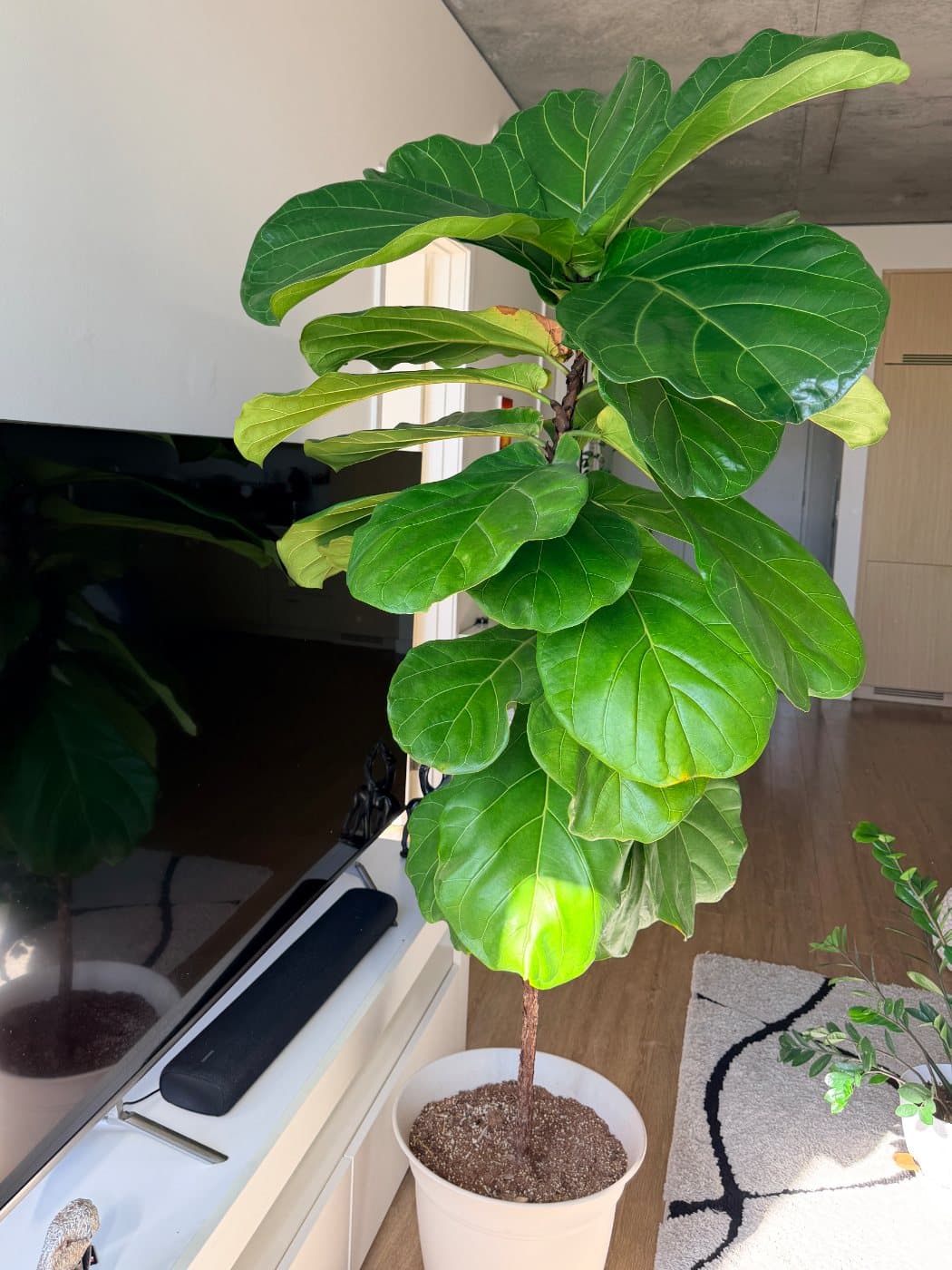
Very large, stiff leaves, wide at the tip and narrower near the stem, like a violin or fiddle.
Prominent pale veins and a slightly wavy, leathery surface.
Grows as a woody stem or tree; a broken leaf or stem bleeds white, milky sap.
Its relative Ficus elastica (rubber plant) has smooth, oval, glossier leaves.

Light and water
Bright light, including some direct morning sun. A spot right by a bright window is ideal; in low light it drops leaves.
When the top 5 cm (2 in) of soil is dry, then water thoroughly and let it drain. Overwatering is the most common way to lose one.
Humidity and temperature
40 to 60%. Keep it away from heating and air-conditioning vents.
16 to 24 °C (60 to 75 °F). Avoid cold drafts and sudden temperature swings.
Is a Fiddle Leaf Fig safe for cats and dogs?
Toxic to cats and dogs. The milky sap irritates skin, the mouth and the stomach.
Tips for a healthy Fiddle Leaf Fig
Pick its spot carefully and leave it there; moving it often leads to leaf drop.
Rotate it a quarter turn every few weeks so it grows straight.
Wipe the big leaves regularly; dust cuts down the light they can use.

Common Fiddle Leaf Fig problems
Leaves dropping: A move, a cold draft, too little light, or a big swing in watering.
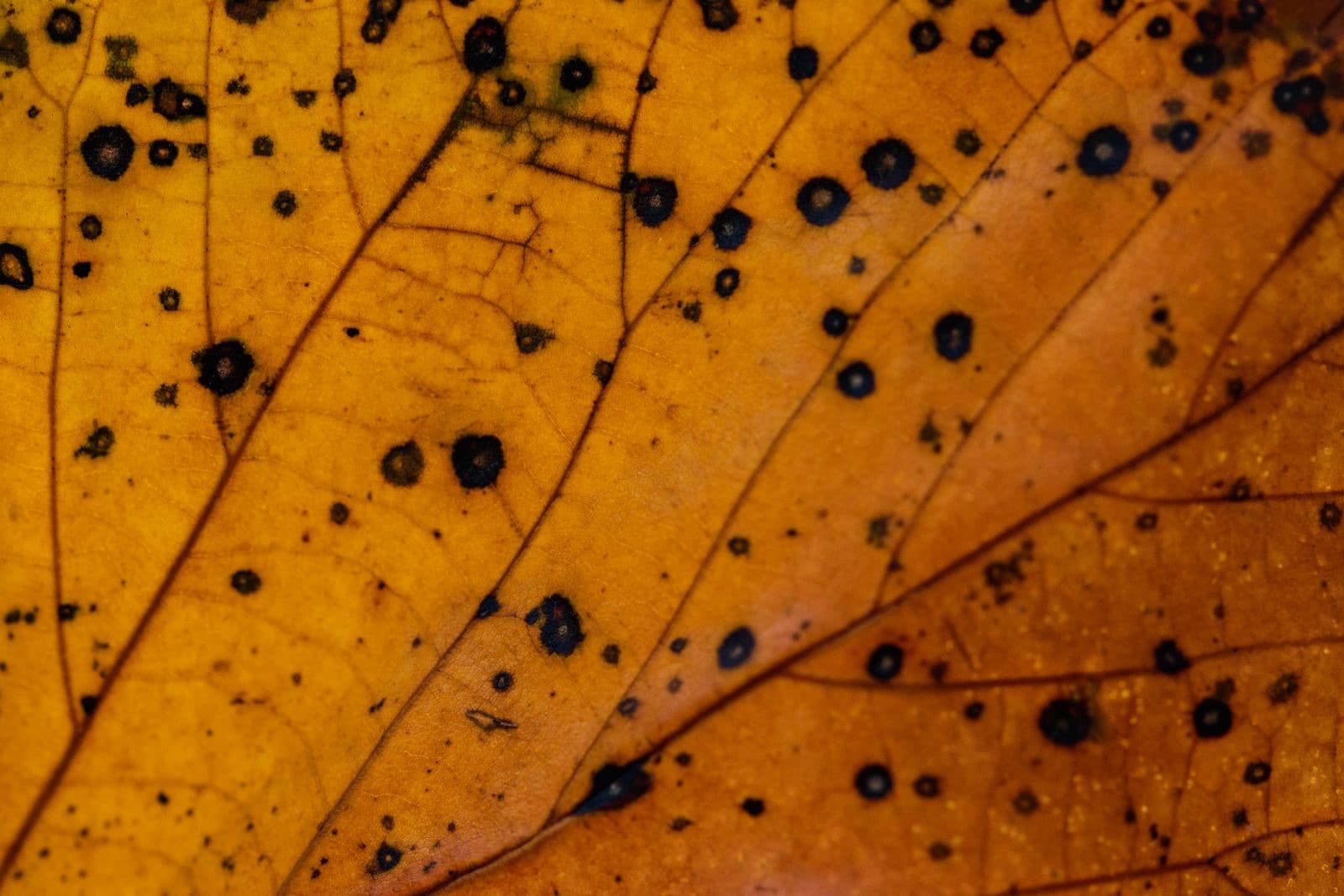
Brown spots in the middle of leaves: Typically overwatering and early root rot, especially on lower leaves.
Yellowing, drooping leaves: Too much water. Let the soil dry further between waterings.
Losing leaves after repotting: Transplant shock. Keep care steady and give it a few weeks.
Our Fiddle Leaf Fig's comeback
These are real photos of our fig, Fiddle Fi Fo Fun. We overwatered it on a schedule until it was down to a single leaf. Drier soil, more light and a lot of patience brought it back.
Fiddle Leaf Fig questions
Why is my Fiddle Leaf Fig dropping leaves?+
The usual causes are a recent move, cold drafts, not enough light, or overwatering. Find it a bright spot, water only when the top 5 cm is dry, and avoid moving it while it recovers.
How much light does a Fiddle Leaf Fig need?+
A lot: bright light right by a window, ideally with a few hours of gentle direct morning sun. It's one of the least tolerant houseplants of low light.
Is Fiddle Leaf Fig toxic to cats and dogs?+
Yes. Its milky sap irritates the mouth, stomach and skin, so keep it away from pets that chew plants.
Identify it with a photo
Don't know what you've got? Take a photo in OFPlants and Tad names your plant in seconds, tells you if it's toxic to cats and dogs, and gives you a care guide for light, watering, temperature and humidity.
 Get it onGoogle Play