Can Houseplants Add Humidity?
Honest answer: a little, and here's what really helps
This is part of our houseplant care guides on watering, light and choosing plants.
If your heating is drying out the air, you might hope a few more plants will fix it. It's a reasonable thought. Plants do release water vapor, and a room full of greenery can feel softer and fresher.
But there's a big difference between the moist air right around a plant's leaves and the humidity of a whole room. Here's what plants really do, how many it actually takes to change a room, and the practical ways to keep both you and your plants comfortable.
Plants breathe out water
Plants really do add moisture to the air. They pull water up from the soil through their roots, move it through their stems and leaves, and release it as vapor through tiny pores on the leaf surface called stomata. That process is transpiration, and outdoors it moves enormous amounts of water from soil back into the air.
Indoors, the same thing happens on a much smaller scale. Every leaf on your windowsill is quietly giving off a little vapor.
So the basic claim is true. The real question for plant owners is how much that vapor changes the air in a whole room, and the answer depends a lot on how many plants you have and how much the room's air is being swapped out.

It takes a lot of plants to raise humidity
The best real-world numbers we've seen come from a small office test with the air conditioning switched off, the door shut and nobody coming in. With no plants, humidity sat at about 29%. With 5 Boston ferns it rose to about 39%, and with 18 ferns it reached about 49%.
That's a genuine change, but look at what it took: a closed room, no air conditioning and a crowd of large, thirsty ferns. Your room, with open doors, heating and a couple of pots, may see far less.
This is the key difference between a plant-level effect and a whole-room effect. A few plants make a small bubble of moister air right around their leaves. Raising the humidity of an entire room takes many plants, or a different tool altogether.

Winter indoor air is dry
Many common houseplants do best at around 40 to 50% relative humidity. In winter, though, heated indoor air can drop to just 10 to 20%. That's a wide gap, and a couple of pots won't close it.
Tropical plants feel this first. You might notice crispy leaf edges, brown leaf tips or curling on plants like calatheas, ferns and alocasias.
It helps to know your numbers before you change anything. An inexpensive hygrometer from a hardware store shows your room's humidity, so you can tell whether dry air is really the culprit or whether you're looking at a watering or light problem instead.

Skip the mister for humidity
Misting feels helpful, but it isn't an effective way to raise humidity. The droplets dry off leaves within minutes, so you'd have to mist many times a day to make any lasting difference, and the room's humidity barely moves.
There's a downside too. Leaves that stay wet, especially in cool rooms with little airflow, are more likely to develop leaf spot diseases.
If you enjoy misting as a ritual, go easy and do it early in the day so leaves dry quickly. Just don't count on it to fix dry air. For that, grouping, pebble trays and a humidifier do a much better job.

Group plants and use pebble trays
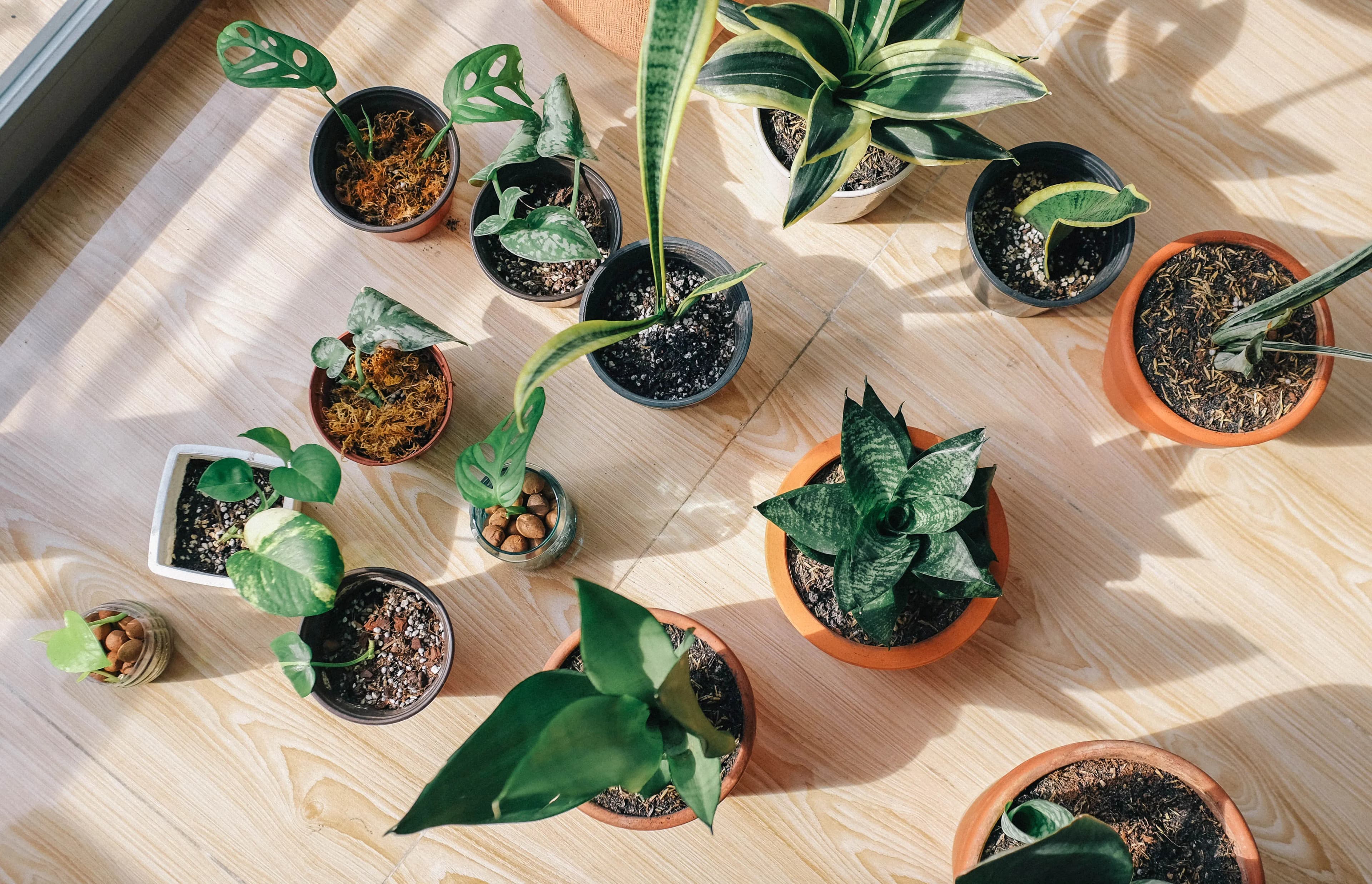
Here's where the plant-level effect works in your favor. When you cluster plants together, the moisture coming off their leaves and soil lingers around the group, giving each plant slightly moister air than it would get alone.
Pebble trays add to that. Fill a shallow tray with pebbles or pea gravel, add water, and set your pots on top. Keep the water level below the bottom of the pots so the roots never sit in water, which can lead to root rot. As the water evaporates, it raises humidity right around the plants.
Neither trick will change a whole room's humidity, and that's fine. Your fern doesn't need the whole living room to be humid. It needs the air around its leaves to be a little less dry.

Use a humidifier for real room humidity
If you want to raise humidity across a room, a humidifier is the tool that does it. It's the most reliable fix for dry winter air for plants and people alike.
It needs some care, though. Keep room humidity at or below 50%, since higher levels can encourage dust mites and mold. Empty, wipe and refill portable units daily, and clean them every third day to stop scale and film from building up. Fill them with low-mineral water, ideally distilled, because tap water can leave white mineral dust around the room.
If you're growing humidity lovers, our Alocasia care guide covers how much moisture those dramatic leaves really want.

Too damp? Watch for mold
More isn't always better. Keep indoor humidity below 60%, and ideally between 30 and 50%. Above that, mold and dust mites have an easier time, which isn't good for your home or for anyone with allergies or asthma.
Watch for the warning signs. Condensation on windows, walls or cold pipes means the air is holding more moisture than the room can handle. When you see it, dry the wet surfaces, open a window, run exhaust fans or use a dehumidifier until things settle.
Plants can play a part here too, mostly through the soil. Constantly soggy pots and full saucers add moisture and can grow mold. Our guide on whether houseplants can cause mold explains how to keep that in check.

“Your plants don't need a humid room. They need a little moist air around their own leaves.”
Houseplants and humidity: common questions
Do houseplants increase humidity?+
Yes, a little, through transpiration. A few pots barely change a whole room, but many plants in a closed space can raise humidity noticeably.
How many plants does it take to raise humidity in a room?+
In one closed office with the air conditioning off, 5 Boston ferns raised humidity from about 29% to 39%, and 18 ferns took it to about 49%. Most homes with open doors and heating will see less.
What are the best plants for dry rooms?+
Plants that tolerate dry air, like snake plants, ZZ plants and cacti, handle low humidity better than ferns or calatheas. If you love humidity lovers, group them and add a pebble tray or humidifier.
Does misting raise humidity for houseplants?+
Not in any lasting way. The water evaporates within minutes, and leaves that stay wet are more prone to leaf spot diseases.
What humidity is best for houseplants and people?+
Many houseplants like 40 to 50%, and keeping a home between 30 and 50% helps limit mold and dust mites. Try not to go above 50% with a humidifier.
Get watering reminders
OFPlants keeps a watering and feeding schedule for each of your plants and reminds you when one is due, so you water when the plant needs it, not when you remember.
 Get it onGoogle Play
The bottom line
Houseplants add a little moisture to the air, mostly right around their own leaves. Changing a whole room takes a lot of plants, so for dry winter air, use a humidifier and keep humidity at or below 50%. Group plants, skip constant misting and watch for condensation. For more on keeping soil and roots healthy, see how to save an overwatered plant.