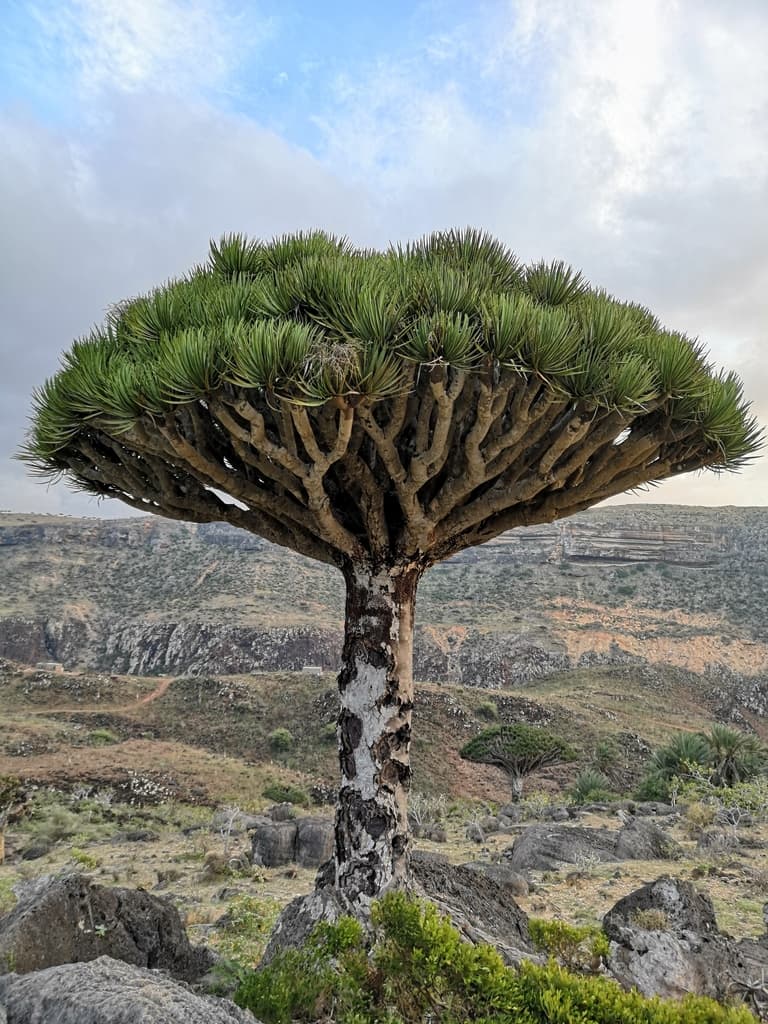
Dragon Blood Tree
Dracaena cinnabari
Step into the enchanting world of the Dragon Blood Tree, a plant that seems pulled straight from the pages of a fantasy novel. This striking tree, native to the remote Socotra archipelago, is as intriguing as its name implies.
Dragon Blood Tree · Quick Care
- Water
- Allow the soil to dry out between waterings; prefers well-drained soil.
- Light
- Thrives in bright, indirect light, but can tolerate some direct sun.
- Humidity
- Prefers low to moderate humidity levels, typical of an arid environment.
- Temperature
- Enjoys warm temperatures, ideally between 70-80°F (21-27°C).
- Difficulty
- Moderate; requires specific conditions to mimic its native habitat.
A Mythical Appearance
The Dragon Blood Tree is instantly recognizable by its umbrella-shaped canopy and densely packed leaves that seem to defy gravity. This unique shape is not only visually striking but also helps the tree survive in its arid environment by providing shade and reducing water loss.
Ancient Origins
Dracaena cinnabari is a relic from the ancient world, with a lineage dating back millions of years. Its survival is a testament to its adaptability and resilience in the face of changing climates and environments over millennia.
The Mystique of Dragon's Blood
The tree gets its dramatic name from the dark red resin it produces, known as 'dragon's blood.' This resin has been used for centuries in traditional medicine, dyes, and even as incense, adding to the tree's mystical aura.
Conservation Concerns
Despite its hardiness, the Dragon Blood Tree faces threats from overgrazing and habitat loss. Conservation efforts are crucial to protect this species and ensure it continues to thrive in its native habitat.
A Unique Ecosystem
The Socotra archipelago, home to the Dragon Blood Tree, is often called the 'Galápagos of the Indian Ocean' due to its unique biodiversity. This isolated environment has allowed the tree to evolve with distinctive traits found nowhere else on Earth.
Fun Facts
• The Dragon Blood Tree can live for hundreds of years.
• Dragon's blood resin was once believed to have magical properties.
• The tree's unique shape helps collect moisture from the air.
• The Dragon Blood Tree's canopy provides a microhabitat for various species.
• Socotra's landscape is home to many other endemic species.
• The tree is part of the dracaena family, which includes familiar houseplants.
Frequently asked
Why is it called the Dragon Blood Tree?+
The name comes from the red resin it produces, known as 'dragon's blood.'
Can I grow a Dragon Blood Tree indoors?+
While challenging, it's possible with the right conditions, such as bright light and low humidity.
What is dragon's blood used for?+
Traditionally, it's been used in medicine, dyes, and incense.
Is the Dragon Blood Tree endangered?+
It's not currently endangered but faces threats from habitat loss and climate change.
Meet more plants like this
Identify, diagnose, and care for your plants with Only Fans of Plants.
Open the app